Multiple independent human studies, including our own, show that people with MS have reduced abundance of Prevotella species, which are associated with mucosal immune regulation.
We were the first to demonstrate that the human commensal Prevotella histicola, but not other human or mouse gut commensals, can suppress disease in the EAE model of MS (Mangalam et al 2017 Cell Reports). We subsequently showed that P. histicola is as effective as FDA-approved MS therapies (Copaxone® and interferon-β) in reducing neuroinflammation by promoting regulatory T-cell responses and suppressing Th1/Th17 pathways in the gut, periphery, and CNS.
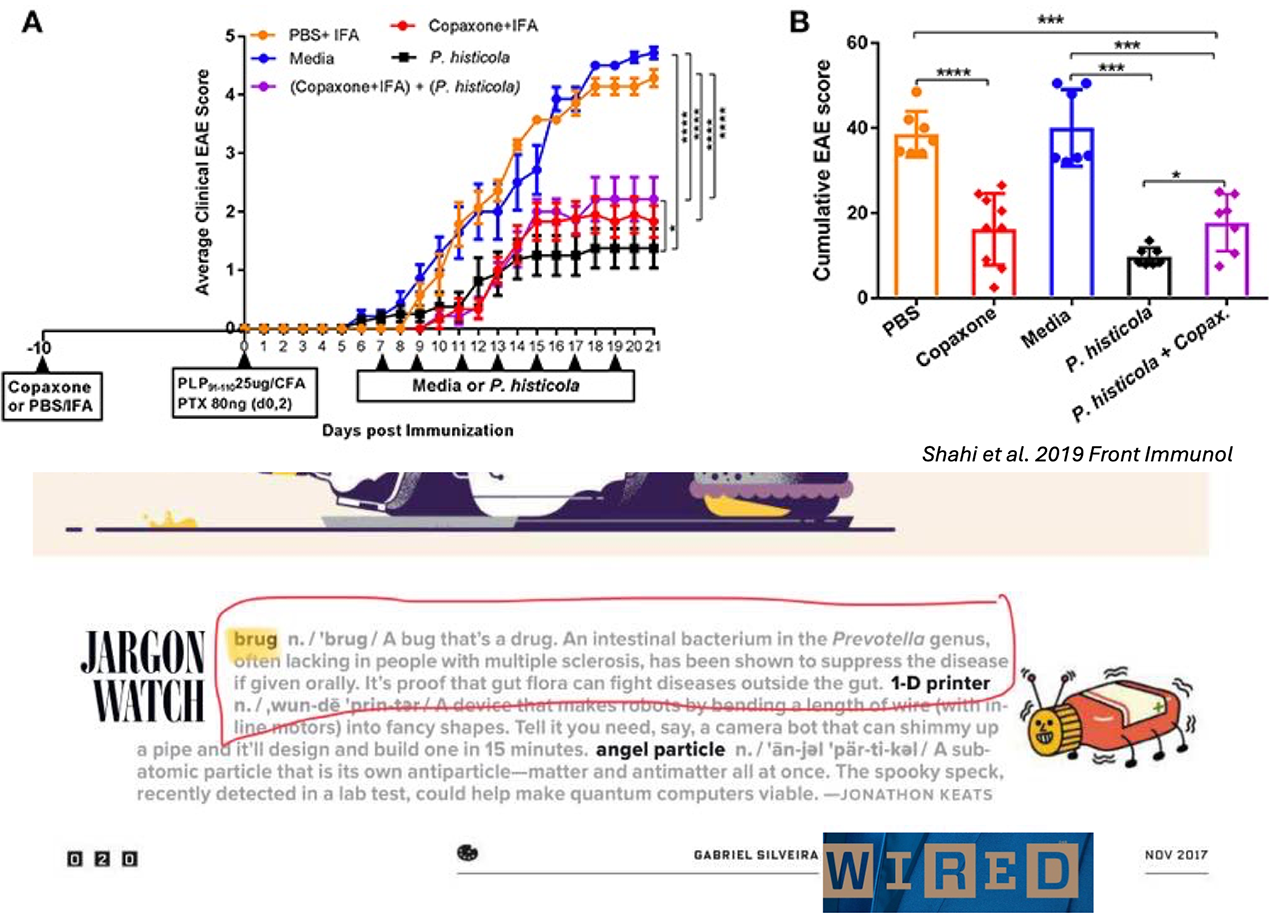
Most recently, in a PNAS study, we demonstrated that Prevotella copri strains enriched in healthy controls drive the microbial ecosystem toward an immune homeostatic state, whereas MS-associated Blautia strains drive pro-inflammatory network restructuring and worsened disease severity.
Together, these studies position Prevotella as a representative BRUG (Beneficial Resident Utility Gut microbe) and support the development of microbe-based immunotherapies in MS.
Key Findings & Interpretation
- The human commensal P. histicola uniquely suppresses EAE while increasing regulatory T cells and reducing Th1/Th17 CNS infiltration.
- P. histicola performs as well as interferon-β and Copaxone® in preclinical therapeutic comparisons.
- P. copri strains enriched in healthy controls promote homeostatic microbial and immune networks, while MS-associated Blautia strains promote pro-inflammatory microbial ecology and worsened disease.
- These findings support microbiome-restoration and microbial therapeutic strategies to re-establish immune tolerance in MS.
Future Directions
- Identify strain-specific molecular mediators (surface glycans, metabolites, secreted factors) that drive immune tolerance.
- Engineer defined Prevotella-based consortia that enhance stability and colonization in human gut environments.
- Advance BRUG-based therapeutic development, including formulation, safety profiling, and pre-clinical readiness for human trials.
Selected Publications

Mangalam AK, Shahi SK, Luckey D, Karau M, Marietta E, Luo N, Choung SR Ju J, Sompallae R, Gibson-Corley K, Patel R, Rodriguez M, Chella D, Taneja V, and Murray J. (2017). Human Gut-derived Commensal Bacteria Suppress Central Nervous System Inflammatory and Demyelinating Disease. Cell Reports. 20:1269-77. PMID: 28793252

Shahi SK, Freedman S, Murra A, Zarei K, Sompallae R, Gibson-Corley K, , Karandikar N, and Murray J. Mangalam AK, (2019). Prevotella histicola, a human gut commensal, is as potent as Copaxone® in an animal model of multiple sclerosis. Front Immunol. DOI: 10.3389/fimmu.2019.00462 PMID:30984162
Shahi SK, Jensen SN, Murra AC, Tang N, Guo H, Gibson-Corley KN, Zhang J, Karandikar NJ, Murray JA, Mangalam AK (2020). Human Commensal Prevotella histicola Ameliorates Disease as Effectively as Interferon-Beta in the Experimental Autoimmune Encephalomyelitis. Front Immunol. doi: 10.3389/fimmu.2020.578648. PMID: 33362764